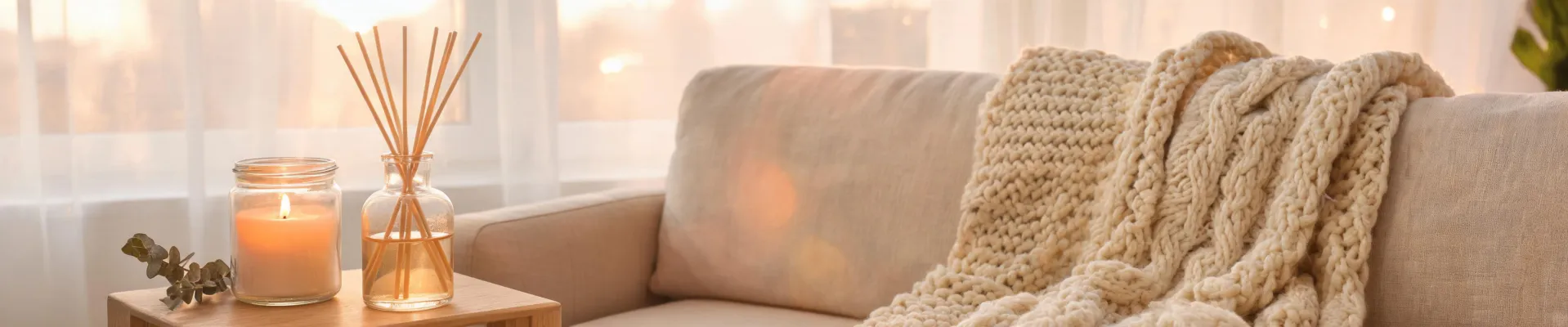
Handmade doesn't automatically mean better or safer. A beautiful holder that's the wrong size or shape can wobble, scorch your table, or just crowd the plate. What matters is whether the holder fits the candles you burn and the table you eat at. A brand like Chesapeake Bay Candle knows this—its sea glass-inspired vessels are designed for both mood and function. The lesson: the holder must serve the flame, not compete with it.
The Real Question Isn't 'Handmade' — It's Fit
Handmade candle holder sets get a free pass on quality, and that's a mistake. Most buyers assume that the word 'handmade' guarantees something special — better materials, safer construction, a more beautiful centerpiece. In my view, that assumption is exactly why so many of them end up with a set that looks gorgeous in the listing photo but wobbles on the table or scorches the wood beneath it. The real question isn't whether a holder is handmade; it's whether it fits the candles you actually burn and the table you actually eat at. A brand like Chesapeake Bay Candle, for example, designs its vessels around a specific mood — their sea glass-inspired collection is meant to evoke coastal memories and brighten the everyday — but the lesson carries over to any holder: the vessel is part of the experience, not an afterthought. If the holder fights the flame or crowds the plate, no amount of artisanal charm will save the dinner.
What does 'fit' actually mean here? It starts with the basics: the holder's opening must match your candle's diameter, and the base must be wide enough to keep a burning taper or pillar from tipping over. But fit goes deeper than geometry. A holder that is too tall for a low table reads as a wall of glass instead of a warm glow; one that is too short for a 3-wick pillar lets the flame sit at eye level and makes the centerpiece feel cluttered. The brand's origin story supports this broader view. Mei Xu, who founded Chesapeake Bay Candle, built a company whose whole premise is that fragrance and design work together to create a moment. If you treat the holder as an afterthought, you're undercutting half of the experience. So the first test of a handmade set isn't whether it's pretty; it's whether it disappears into the scene and lets the candle do its work.
Why a Pretty Holder Can Be a Safety Problem
The 'handmade' label does more harm than good when it convinces buyers that a candle holder is inherently safe. People assume that something made by hand must be better proportioned and more durable than a factory item. That assumption ignores the basic physics of a candle in a container. A narrow base, a top-heavy silhouette, or a material that conducts heat poorly can turn a gorgeous centerpiece into a fire hazard. The issue is not the craftsmanship; it's the category confusion. A decorative object and a functional candle holder are not the same thing, even when they share the same artisan origin. Once you light the wick, the holder becomes part of the flame's environment, and its design has to obey practical rules that a purely ornamental piece can ignore. That is why every set in this article is judged on two axes: how it looks at the dinner table and how it behaves when the candle is actually burning.
Tipping is the most common failure mode, and it usually comes from a size mismatch. A pillar candle that is taller than the holder's base is an invitation to disaster; a taper that is too loose in a hand-drilled hole tilts with the first draft. The mechanism behind this is simple: the center of gravity has to stay inside the base footprint. When a holder is designed primarily for looks, the base is often smaller than the candle's height, making it top-heavy. Even a well-made ceramic piece from a brand that understands candles, like Chesapeake Bay Candle with its sea glass-inspired vessels, still requires you to pair the right holder with the right candle. Their larger 3-wick candles sit in proportionately broader containers; that proportion is not an accident. If you put that same candle in a narrow artisanal holder, you get a leaning tower. So the first rule of safe use is to check that the base diameter is at least a third of the candle's height.
Heat is the second, quieter failure. Many handmade materials are not rated for the sustained heat of a candle flame. A wooden holder might be coated with an oil finish that softens and drips; a low-fired ceramic can develop hairline cracks or a burn mark. Even glass needs to be thick enough to distribute heat evenly — thin novelty glass can shatter if a candle burns too close to the bottom. Proportion matters here too. A holder that is too shallow puts the flame near the table surface, which can scorch a wooden table or stain marble. A holder that is too deep keeps the flame in a tunnel where it flickers and leaves soot on the interior. The right proportion is one that keeps a clear inch or more between the candle bottom and the holder's base, and allows air to reach the flame from all sides. When you shop for a handmade set, hold it up to the light and check for an air gap built into the design; that gap is not a flaw, it's a safety feature.
Handmade Doesn't Mean One-Size-Fits-All: Compare Your Options
To compare handmade sets intelligently, you need a standard that goes beyond 'is it pretty?' The most useful criteria are stability, heat resistance, ease of cleaning, and how the holder's visual weight works with your table. These are the same standards that a brand like Chesapeake Bay Candle applies when it designs its vessels. Their sea glass-inspired containers are not just decorative; they are engineered for a mood and for repeated use. That design philosophy gives you a working checklist: can the holder accommodate a taper without wobbling, can you wipe wax out without scraping the interior, and does the material conduct heat safely? Apply those questions to any material and you'll quickly see that the word 'handmade' tells you nothing about the answer. A quilted ceramic piece can fail on every criterion while a simple glass cup passes them all.
Glass is the default safe choice for most dining tables. It is non-porous, easy to wipe clean, and thick glass handles heat well. The sea glass aesthetic that Chesapeake Bay Candle uses is a reminder that glass doesn't have to be plain; it can be textured, colored, and frosted without losing its functional edge. Metal, by contrast, can look chic but has a serious downside: it becomes hot to the touch very quickly, and thin-gauge metal may heat the table beneath it. If you choose metal, look for a double-wall design or a built-in drip tray. In my view, glass beats metal for the simple reason that you can see wax build-up and wash it out with hot water. A metal holder often hides residue in its corners, and some finishes can even be damaged by cleaning products. That's a hidden cost that shows up after the third dinner party, not in the product photo.
Wood and ceramic are the materials that usually carry the 'handmade' label, and both need careful evaluation. Wood brings warmth and organic texture, but it is the least heat-resistant option unless it is specially lined. A wooden holder designed for taper candles needs a metal or glass insert to protect the wood from the flame. Ceramic is more forgiving, but it can be brittle and surprisingly heavy. A hand-thrown ceramic set with a textured glaze can be gorgeous, but if the glaze is not well-sealed, wax can soak into the surface and become impossible to remove. The key is to check the thickness of the base and whether the piece has a smooth, sealed interior. If the maker can't tell you what clay they used, assume it's not high-fired and treat it as decorative only. That may sound harsh, but the alternative is a ruined tablecloth and a holder that becomes a permanent wax sculpture.
A 30-Second Checklist Before You Click Buy
After reading through the failure modes and materials, you can narrow your options in about thirty seconds. The checklist is simple enough to remember even when you're shopping at a weekend market. First, measure your candles before you even look at holders — carry a taper and a pillar in your bag if you have to. Second, set the holder on a flat surface and give it a gentle push from the top; if it rocks, it fails. Third, ask yourself whether you're willing to hand-wash this thing after every dinner, because wax will drip whatever the listing photo suggests. Fourth, check for a heat gap under the candle seat. These four checks won't tell you which style is 'best', but they will tell you which ones are safe enough for your table. Once a set passes, you can happily choose the one that makes you smile.
Let's walk through the checklist with reasoning. The base-width test is non-negotiable because a top-heavy holder is a tipped candle waiting for a draft. The cleaning test matters more than most buyers think; you want a surface that releases wax with a blast of hot water, not one that traps it in crevices. The heat-gap test protects your table and prevents glass shattering. The fourth item, which is easy to overlook, is a durability check that looks at the design intent: does the brand treat the holder as a lasting object? Chesapeake Bay Candle's philosophy of consistent, long-lasting fragrance is built on the idea that a candle experience should hold up over time. That same thinking applies to the holder. A set that is meant to be used for years, not one that is purely decorative, will have reinforcements like thicker glass at the base or a flush-fitting metal insert. If the product listing doesn't mention any of these features, assume the maker didn't design for longevity.
The Bottom Line: Buy for the Table, Not the Trend
So here is my verdict: buy for the table, not for the trend. The best handmade candle holder set for a dining table is the one that passes the practical tests and still feels like a deliberate part of the room. That usually ends up being a wide-based glass set, because glass is forgiving, easy to clean, and its transparency lets you see exactly where the wax is. The durability philosophy behind brands like Chesapeake Bay Candle — the promise of consistent, long-lasting fragrance comes from a vessel designed to protect the candle and the space around it — tells you that longevity is a design choice, not an accident. When you see a brand that talks about hours of mood-evoking fragrance, you're seeing a maker who treats the whole system seriously, including the holder. I'd choose a plain glass set from such a brand over an ornate ceramic piece from someone who can't explain why their base is narrow.
Of course, there are exceptions. If you're styling a rustic centerpiece and will never light the candles, a carved wooden or heavily textured ceramic set is fine. If you're an experienced collector who knows how to anchor a holder with sand or wax, you can make a narrow-based design work. But for the majority of people hosting real dinners with real flames, the boundary condition is clear: choose a holder that serves the candle, not the other way around. The moment you accept that, the 'handmade' label becomes an indicator of human touch, not a guarantee of quality. The best test remains the one from the opening: does this holder disappear into the evening and let the flame do its work? If the answer is yes, it doesn't matter whether it came from a factory or a potter's wheel. That's the standard I use when I look at a set, and it's the one that saves me from buying something beautiful that I'll regret on the first night.
Exceptions exist: for unlit rustic centerpieces, ornate ceramic or carved wood are fine. But for real dinners with real flames, the rule stands—choose a holder that serves the candle. That's the test: does it let the flame do its work? If yes, the debate ends.

Jane Smith
I’m Jane Smith, a senior content writer with over 15 years of experience in the packaging and printing industry. I specialize in writing about the latest trends, technologies, and best practices in packaging design, sustainability, and printing techniques. My goal is to help businesses understand complex printing processes and design solutions that enhance both product packaging and brand visibility.
More notes
Latest fragrance journal posts
Nourison Home Nourison Essentials NRE04 Ivory Rug: A Washable Centerpiece for Busy Homes
Discover why the washable Nourison Essentials NRE04 ivory rug pairs practical care with brand heritage, making it a smart choice for busy family rooms.
Nourison Astra Machine Washable Area Rug Review: Worth It?
Nourison Astra machine washable area rug review: why these rugs suit busy homes, how to choose the right one, and a simple rule to decide.
Rain Bird TM2-6 6-Station Indoor/Outdoor Controller: A Practical Verdict
Rain Bird TM2-6 6-station controller review: zone limits, indoor/outdoor truth, traditional vs smart, and dark display troubleshooting.
Rain Bird Plastic Drip Irrigation Emitter Tubing: Choose the Right Type
Choosing between Rain Bird blank tubing and pre-assembled emitter tubing depends on pressure rating, wall thickness, and installation ease, not brand loyalty.
Le Creuset 10-Piece Stainless Steel Set: A Framework for Your Kitchen
Deciding between Le Creuset's 10-piece stainless steel set and buying individual pans? This framework matches the set to your cooking style and induction stove.
Le Creuset Signature Round Dutch Oven Reviews: Weight, Induction, and When to Buy
Read our Le Creuset Signature Round Dutch Oven reviews to learn induction compatibility checks, decode weight complaints, and time your purchase with the pie dish promo.
Le Creuset 10-Piece Stainless Steel Cookware Set: An Honest Verdict
A direct verdict on the Le Creuset 10-piece stainless steel set: who should buy it, why induction compatibility matters, and when to skip it.
Le Creuset Signature Round Dutch Oven: A Field Guide for Induction Kitchens
Does the Le Creuset Signature Round Dutch Oven live up to its price? Learn about induction compatibility, size choice, and why its long history makes it a lasting choice.
Calphalon Premier 12-Piece Space Saving Cookware: The Verdict on Nesting Design
Calphalon Premier 12-piece cookware promises full coverage in one pot's footprint. Verdict: it earns the space-saving label for storage-focused buyers.
Calphalon Premier Space Saving 10-Piece Cookware: The Stacked-Pan Verdict
Our verdict on Calphalon's Premier Space Saving 10-Pc. nonstick set: a smart buy for small kitchens needing stackable cookware, not for those needing heavy or deep pots.