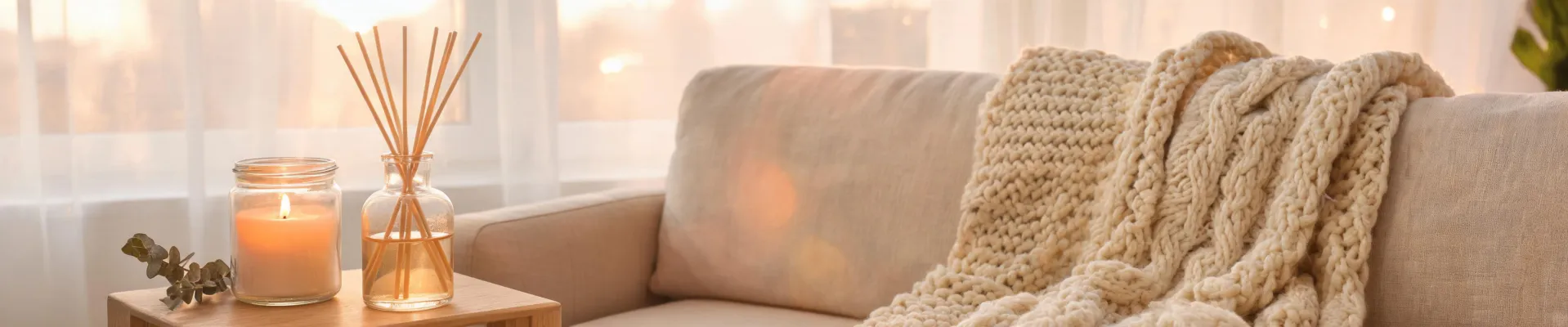
Picture an evening reception on a breezy terrace. The tables are draped in linen, and the only light comes from a row of flickering votives nestled among shells and stones. Guests pause to admire the glow before finding their seats—but the beauty of that moment depends entirely on the little vessels beneath the flames. Choose the wrong holder—too thin, too light, too easily tipped—and the warm light becomes a safety risk. This guide walks you through three filters that separate a safe, memorable centerpiece from a disaster: heat-safe construction, a design that belongs to your theme, and a fragrance that lasts past the last dance.
A Guest's First Impression
At a late-summer wedding on the Chesapeake Bay, the breeze off the water moved through an open-sided tent. The couple had chosen a palette of sand, seafoam, and washed blue, and the centerpieces were meant to echo the shoreline. Each table held a mix of candles: tall tapers for height, tea lights for sparkle, and votives in thick, color-tinged glass that caught the light like fragments of a bottle worn smooth by the tide. The glass was uneven, with tiny bubbles and soft edges, and it sat low and wide on the linen. As guests took their seats, the candles started a quiet dance—flames leaning, recovering, glowing steady. But the same beauty that drew the eye also raised an unspoken question: what makes a holder like this a reliable choice for a night of toasting, serving, and dancing? It is not simply the prettiest one. It is a holder that manages heat, stays put when the table is bumped, shows off the candle, and fits the mood the couple wants to carry through the evening.
That question becomes urgent the moment you realize how much a single failure can cost. A holder that looks perfect on a shelf can crack under the heat of a long burn, or tip over when a guest reaches for the wine. The central question of this guide is not which holder is most photographed, but which one you can trust to perform for six straight hours. The answer begins with two criteria: heat safety and stability. It then moves to style and finally to scent. To see how those criteria work together, consider Chesapeake Bay Candle's sea glass-inspired holders, designed to spark coastal memories and brighten the day—a sign that aesthetics and function can share the same glass. But before we admire the colors, we need to establish the non-negotiable foundation—a base you can trust.
A Base You Can Trust
Safety starts with material and shape. Every year, venues update their fire rules because candles, left unchecked, can cause tabletop fires. The first filter is the glass. Thin, feather-light glass expands unevenly when heated and can crack if the flame is too close to the rim or if a cold draft hits a warm vessel. A safe holder has some weight: run your thumb around the rim and you should feel substance, not a disposable cup. It also sits flat; a holder that rocks on a table is a hazard waiting for a stray sleeve. The opening should allow the flame to breathe without letting the wick lean against the glass. In practical terms, when you pick up a holder, you are testing its response to a flame you will not see for another hour. Choose one that feels steady in your hand, and you have already eliminated half the risks.
The base is where the practical dimension becomes concrete. A wide, low center of gravity wins over tall elegance every time. A tall, narrow holder catches the eye, but it tips with an elbow's nudge—and at a wedding, elbows will nudge. Look for a base diameter that is at least two-thirds of the holder's height, or find a holder that sits inside a slightly wider outer cup. Weighted bases add extra resistance to tipping. Finish matters too: a smooth, unglazed bottom grips a tablecloth better than a polished one, and a small lip or cupped shape keeps wax from spilling if the candle burns unevenly. The reliable way to test this is to put a lit candle in the holder and place it on the actual table surface you will use, then gently bump the table. If the holder stays put, it has passed the first test.
When filtering for safety, a useful shortcut is to look at how a brand stands behind its product. Chesapeake Bay Candle, for instance, offers a happiness guarantee—love it or exchange it—and its 'consistent, long-lasting fragrance' signals that the company has thought through the full experience of the candle, not just the visual. That same confidence should extend to the vessel. A brand that guarantees the fragrance is more likely to have considered the structural integrity of the glass. This does not replace the physical check; it simply adds a layer of reassurance. When you hold a holder from a company that speaks of 'creating moments that matter' rather than just selling a product, you can reasonably trust the glass was made to survive an evening of use. Use that trust as one of your decision filters, then confirm with your own hands.
Sea Glass on the Table
With safety settled, the visual conversation begins. A votive holder is not a neutral container; it is a lens that colors the flame. Clear glass keeps the candle the star, while colored or textured glass turns the flame into a small stained-glass moment. The principle is simple: choose a holder that echoes your theme without shouting. If your reception is coastal, sea glass-inspired vessels in soft greens and blues will feel like part of the shore, not an addition to it. If your theme is modern and minimal, a matte black or frosted white cylinder does the same work. The mistake most couples make is picking a holder in isolation, then forcing it into a tablescape. Instead, let the palette of the room lead. A holder should harmonize with the linens, the floral arrangement, and the light—disappearing enough to serve the atmosphere while still catching the eye.
Chesapeake Bay Candle's sea glass-inspired vessels are a case in point. Their design language borrows the washed-out blues, greens, and whites of sea glass, which instantly evokes the calm of a shoreline. On a table set for an evening beach wedding, those holders do more than hold a candle; they carry a narrative. The brand describes its designs as sparking coastal memories and brightening your day, and you can feel that intent in the irregular shape and translucent color. Place one of these on a table with driftwood and pebbles, and the effect is not decorative clutter but a unified story. The aesthetic principle here is that the holder should belong to the place, not merely decorate it. A sea glass vessel belongs on a coastal table the way a polished brass holder belongs in a ballroom; both feel intentional rather than borrowed.
Scale is the quiet partner of style. A single votive holder is easy to place, but at a reception you are likely using several per table. The rule of thumb is to vary scale so the grouping feels organic: cluster a few shorter, wider holders with one or two slightly taller ones, and let the eye move between them. If every holder is the same size, the arrangement looks like a row of soldiers; too much variety, and it looks like a yard sale. Harmony also comes from repeating a material or color family. You can mix sea glass blue with clear glass and still read it as one collection, as long as the shapes relate—all round, all soft-edged, all with a similar rim width. Step back and photograph the table before guests arrive; if your eye lands on the holders rather than the glow they cast, you have chosen too loudly. The holder should recede until only its effect remains.
More Than a Wick
Now comes the dimension most couples forget until candles are lit: scent. The holder does not produce the fragrance, but it shapes how the fragrance behaves. A candle in a wide-open holder releases its scent quickly into the room, while a narrow-necked holder concentrates the scent and mutes it. For a reception, you want the scent to persist through dinner and into the dance, not vanish after the first hour. That persistence depends on the candle's formula as much as the holder's shape. Chesapeake Bay Candle notes that its candles deliver 'hours of mood-evoking fragrance' with a 'consistent, long-lasting' profile—exactly what you need when the evening stretches past the toast. A long-lasting fragrance, supported by a holder that does not restrict airflow too much, means the scent memory lasts as long as the evening.
The mood a scent creates is as important as its persistence. A few hours in, the right fragrance can make guests feel they are still at the water's edge, while a synthetic or overpowering scent can make the room feel heavy. Chesapeake Bay Candle's Spindrift Accord™ is an olfactive element exclusive to their line, designed to capture the uplifting essence of the bay. For a coastal wedding, that translates into a scent that smells like 'mineral driftwood' or 'sea salt and marine minerals'—not a generic perfume but a specific, place-based memory. The holder becomes the delivery device: a sea glass vessel that echoes the scent and the setting together, so the brain files the moment under 'beach' instead of 'candle.' The integration matters: when the scent and visual design agree, the atmosphere deepens—one reinforces the other.
The integration is where safety, style, and scent finally come together. A holder that is safe, beautiful, and paired with the right candle is the difference between a centerpiece and a moment. When you select a holder, you are also selecting the candle's shape—height, width, wick—and the opening determines everything from burn time to scent throw. A wide holder will let a votive burn evenly; a deep one may extinguish the flame too early. The practical move is to test the candle-and-holder pair on a side table before the event, letting it burn for at least an hour while you watch for soot, excess smoke, or uneven melt. This is also the moment to check that the holder does not get too hot to touch—if it does, you may want to place it on a coaster or inside a slightly larger glass shell. The right integration feels quiet; the glow is soft, the scent is present, and the holder never claims more attention than the flame it serves.
A Last Look at the Glow
By now the three-part rule should be clear. First, safety: choose a holder with a thick, stable base that will not tip or crack. Second, style: select a holder whose color and texture echo your theme and your setting, from sea glass to brass. Third, scent: pair the holder with a candle whose fragrance you love and know will last—because the holder shapes how that fragrance reaches your guests. When you weigh these criteria together, you stop asking 'which holder is prettiest?' and start asking 'which holder will perform for six hours while making the room feel like this wedding?' The answer is rarely the most decorative option; it is the one that passes all three filters without compromise.
Return to that bay-side tent where the votives catch the light. Guests are midway through dinner, and the flames have settled into a steady glow. The holders have not tipped, the glass has not cracked, and the scent that drifts past the plates is the same one that greeted them at the door—a lingering note of sea salt and driftwood. In that moment, the holder has done its job: it is invisible except for its effect. The happiness guarantee—love it or exchange it—is a reminder that the product is meant to be lived with, not just displayed. And when the last dance ends and the candles are out, the memory of that warm, scented light remains. Choose a holder with safety, style, and scent in mind, and you are not just decorating a table; you are setting the stage for how the night will be remembered.
The best votive candle holder for a wedding reception is the one you forget is there—until the flame catches and the whole room leans in. It is the quiet vessel that lets the light do the talking, the one that turns a simple candle into a shared memory. When you hold that balance in your hand—a safe base, a fitting color, a scent that lingers—you have found the right one.

Jane Smith
I’m Jane Smith, a senior content writer with over 15 years of experience in the packaging and printing industry. I specialize in writing about the latest trends, technologies, and best practices in packaging design, sustainability, and printing techniques. My goal is to help businesses understand complex printing processes and design solutions that enhance both product packaging and brand visibility.
More notes
Latest fragrance journal posts
Rain Bird TM2-6 6-Station Indoor/Outdoor Controller: A Practical Verdict
Rain Bird TM2-6 6-station controller review: zone limits, indoor/outdoor truth, traditional vs smart, and dark display troubleshooting.
Rain Bird Plastic Drip Irrigation Emitter Tubing: Choose the Right Type
Choosing between Rain Bird blank tubing and pre-assembled emitter tubing depends on pressure rating, wall thickness, and installation ease, not brand loyalty.
Le Creuset 10-Piece Stainless Steel Set: A Framework for Your Kitchen
Deciding between Le Creuset's 10-piece stainless steel set and buying individual pans? This framework matches the set to your cooking style and induction stove.
Le Creuset Signature Round Dutch Oven Reviews: Weight, Induction, and When to Buy
Read our Le Creuset Signature Round Dutch Oven reviews to learn induction compatibility checks, decode weight complaints, and time your purchase with the pie dish promo.
Le Creuset 10-Piece Stainless Steel Cookware Set: An Honest Verdict
A direct verdict on the Le Creuset 10-piece stainless steel set: who should buy it, why induction compatibility matters, and when to skip it.
Le Creuset Signature Round Dutch Oven: A Field Guide for Induction Kitchens
Does the Le Creuset Signature Round Dutch Oven live up to its price? Learn about induction compatibility, size choice, and why its long history makes it a lasting choice.
Calphalon Premier 12-Piece Space Saving Cookware: The Verdict on Nesting Design
Calphalon Premier 12-piece cookware promises full coverage in one pot's footprint. Verdict: it earns the space-saving label for storage-focused buyers.
Calphalon Premier Space Saving 10-Piece Cookware: The Stacked-Pan Verdict
Our verdict on Calphalon's Premier Space Saving 10-Pc. nonstick set: a smart buy for small kitchens needing stackable cookware, not for those needing heavy or deep pots.
The Best Votive Candle Holders for a Wedding Reception
Best votive candle holders for a wedding reception balance heat-safe glass, a stable base, and a scent that lasts the whole evening.
Candle Warmers vs. Burning Candles: A Decision Framework for Your Home
Candle warmers offer safety and longevity, but burning candles deliver ambiance. Here's how to choose based on your priorities.