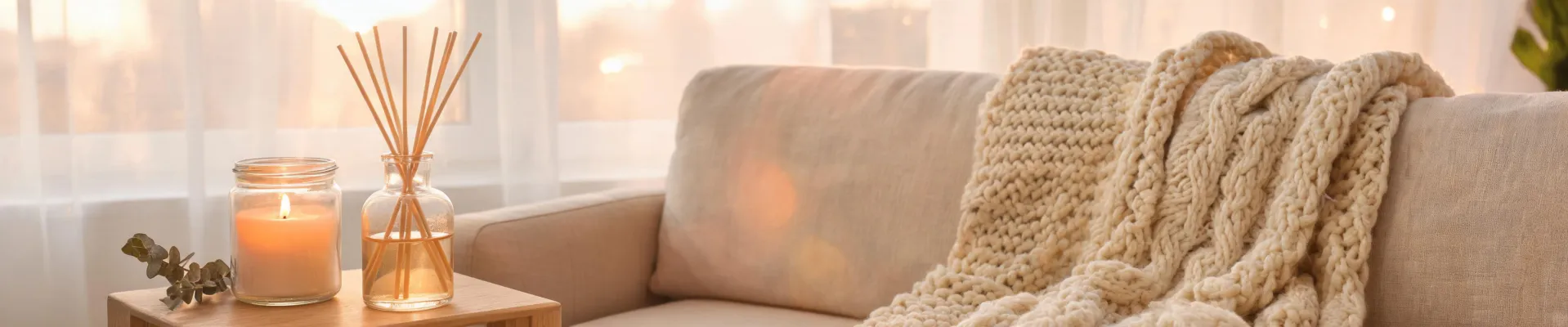
You're choosing between a candle warmer and a flame. The warmer is safer and makes your candle last longer. But the flame brings a living glow and a ritual. Which one you pick depends on what you want the candle to be: a scent appliance or a source of atmosphere.
The Choice: Candle Warmer or Flame?
Picture the end of a long day. You pour a glass of wine, settle into the couch, and reach for a candle. At this moment, the choice between a warmer and a flame isn't about scent alone—it's about the whole atmosphere. A warmer sits quietly, melting wax from below, filling the room with fragrance as the hours pass. A burning wick offers a flicker that catches your eye, a soft glow that makes the room feel alive. Both deliver the same fragrance, yet they create entirely different experiences. For months, you may have assumed that warmers are simply the smarter option—no fire risk, no soot, no need to babysit a flame. But that practical logic overlooks something essential: why you lit the candle in the first place. You light it to change the mood, to mark the transition from work to rest, to create a small ceremony that says the day is over.
Ask yourself what you actually want from a candle, because the answer determines which tool fits. Are you looking for a consistent background scent that lasts all day without supervision? Or do you want a sensory event—the crackle of a wick, the subtle warmth on your face, the visual comfort of a small flame? Candle brands have long understood this distinction. Chesapeake Bay Candle, for instance, positions its products under the banner 'Fragrance for Mind & Body,' and its website is filled with language about evoking memories and lifting spirits. That isn't just marketing copy; it's a signal that the value of a candle extends beyond the molecules it releases. If the brand itself frames the product as an emotional tool, then the way you burn it matters as much as the scent. So the real question isn't 'which is objectively better,' but 'which experience supports the mood you're trying to create?'
How Heat vs. Flame Releases Fragrance
Candle warmers work by applying gentle heat from above or below, melting the top layer of wax and releasing fragrance without ever igniting the wick. The wax reaches a temperature far below its flash point, so there's no combustion, no smoke, and no carbon the flame would otherwise produce. Because the wax is only melted, not burned, the scent compounds remain intact and are released slowly, which is why a single candle can seem to last much longer under a warmer. There's a trade-off, though: the scent throw is often more muted at the start, since the warmer needs time to develop a pool of fragrant wax. If you're the type who lights a candle and expects the room to fill within minutes, you may find a warmer's pace frustrating.
Burning a candle is a different chemistry. When the wick ignites, the heat melts the wax around it, and the liquid wax is drawn up into the flame, where it vaporizes and combusts. That combustion releases both fragrance and heat, and it's the reason a lit candle produces an immediate, robust scent—the whole room can smell like the candle within a few minutes. The flame also raises the temperature of the surrounding air, which helps distribute the fragrance more aggressively. But that efficiency has a cost: the fragrance oil is consumed in the burn, so the candle's life is shorter than the same wax would provide under a warmer. And with burning comes soot, especially if the wick is too long or the candle is in a draft, and you have to be around to attend to it.
The scent profile of each method is noticeably different. A warmer produces a steady, linear release—the fragrance builds slowly and then stays at a constant level for hours, like a diffuser that never fades. A burning candle, on the other hand, gives you an initial burst that is more intense, but it ebbs and flows with the size of the flame and the wax pool; it can also combine the fragrance with the subtle smoky note of the wick, which some people find cozy and others find intrusive. For those who want a clean, pure scent that doesn't change character, a warmer is the more predictable choice. For those who want the room to feel inhabited—where the scent grows, shifts, and carries the marks of the burn—a flame has more personality.
Safety and Convenience: Where They Part Ways
On safety, the advantages of a warmer are hard to argue with. A candle warmer uses electricity to generate heat, and while the plate or bulb can get hot, there is no open flame, no flying sparks, and no risk that a draft will push the flame onto a curtain or a sleeve. You can also leave a warmer running for hours without supervision, as long as you follow basic precautions—use a sturdy, level surface, keep it away from edges, and never cover it. A burning candle demands your attention: fire departments across the country respond to thousands of candle-related fires each year, many of them in bedrooms. The advice is always the same: never leave a lit candle unattended, and keep it at least a foot away from anything that can burn. If you're a parent, a pet owner, or simply someone who tends to forget things, the flame's added risk may outweigh its charm.
Convenience is a closer call. A warmer is more forgiving: you switch it on, it works, and you can walk away. Many warmers come with timers or automatic shut-offs, so you can even fall asleep with one running (though it's wise to check the manufacturer's instructions). Cleanup is also simpler—no wick trimmings, no soot on the glass, and the wax pool stays clean. But burning a candle has its own convenience: there's no plug to find, no waiting for the plate to heat up, and no bulky device to store. You light it with a striker, and it's instantly alive. For people who want a daily ritual that feels natural and unplugged, the few extra seconds of a match are part of the appeal. The warmer wins on hands-off operation; the flame wins on effortlessness in the moment.
The Intangible: Atmosphere and Ritual
What the practical comparison leaves out is the sensory weight of a real flame. The human eye is drawn to fire; that's been true since we first gathered around a hearth. A lit candle creates a miniature landscape of light and shadow, which makes a room feel closer, more intimate. The slight warmth you feel on your hands when you cup a candle, the almost imperceptible crackle of the wick, the way the flame sways in your breath—these are details a warmer cannot reproduce. For many people, a candle is not simply a scent delivery device; it's a piece of living décor that changes the spatial mood. When you choose a warmer, you may gain safety and efficiency, but you trade away a sensory anchor that makes a house feel inhabited.
The candle industry itself understands that the flame carries emotional meaning. Chesapeake Bay Candle talks about its 'signature Spindrift Accord'—an olfactive element exclusive to the brand, scientifically designed to capture the uplifting essence of the bay—and then frames its whole product line around 'mood-evoking fragrances.' The brand's website says its candles deliver 'hours of mood-evoking fragrance' to help you 'create moments that matter.' That is not just about chemistry; it's about the moments that happen around the candle. The warm glow, the shared silence, the focus of a dinner table—those moments are the payload. If a brand leans that heavily on atmosphere, it's acknowledging that the flame itself is part of the product.
Ritual is the other piece a flame provides. Lighting a candle is an act with a beginning, a middle, and an end: you strike the match, you watch the wick catch, you adjust the flame, and later you snuff it out. That sequence gives your evening a sense of ceremony. With a warmer, the action is just clicking a switch—functional, but thin. Over time, small rituals shape how you relax. The person who lights a candle every evening at seven is not just adding fragrance to the air; they're signaling to themselves that the workday is over. That transition has real psychological weight. A warmer can't create a boundary in the same way, because its presence is passive—it doesn't demand a moment of conscious attention. If you value routines with tangible steps, the ritual of burning may be what you're actually seeking.
Cost, Life Span, and the Decision Rule
Now let's talk money, because the sticker price tells only part of the story. A warmer can cost $15 to $60, while a basic candle runs $10 to $30. The warmer is a one-time purchase, so it can seem cheaper than constantly replacing candles. But a warmer doesn't make your candle last forever—it makes it last longer. Because the wax isn't burned away, a candle under a warmer can provide fragrance for many more hours than the same candle burned. Over a year, if you prefer scent over spectacle, the warmer can cut your candle spending. If you value the flame, you'll go through candles faster, and that's not waste—it's the cost of the experience you want. The real price difference isn't between the two devices; it's between two ways of living.
Put the trade-offs side by side and a clear picture emerges. On the left, the warmer: no open flame, so the fire risk drops to nearly zero; a longer candle life because the wax isn't consumed; and a scent that stays consistent but gentle. On the right, the flame: immediate, robust fragrance; a dynamic glow that changes the room's ambiance; and a ritual feel that a switch can't replicate. The costs point the same way—the warmer saves money over time if you're buying candles for their scent, while the flame spends that money on atmosphere. There's no single winner in this table; there are two different columns, each with its own items. And that's the point: the decision rule isn't about which column has more checks, but which column matches the experience you want.
So here's a practical rule you can apply tonight. If you primarily want a candle to fill your room with fragrance for hours—while you work, sleep, or simply enjoy a background scent—a warmer is the better choice. It's safer, more economical, and easier to live with. On the other hand, if lighting a candle is part of your wind-down ritual, if you savor the first flicker and the warmth on your face, if the sight of a flame makes the room feel more like home, then burning a candle is worth the extra attention and the shorter life. The rule isn't complicated: choose by your primary need. Want a scent appliance? Buy a warmer. Want a moment of ceremony? Light the wick. There's no wrong answer as long as you're honest about which one you're asking the candle to be.
The Verdict: Choose by Your Priority
After weighing all the factors, the verdict is that candle warmers are not universally 'better' than burning candles—they're better at some things, and worse at others. If you value safety, long-lasting scent, and low maintenance, a warmer is the smarter buy. If you value atmosphere, ritual, and the immediate sensory reward of a flame, then burning is the richer experience. The thesis that ties it together: warmers win on safety and scent longevity; burning candles win on atmosphere and ritual. Neither is objectively superior; the best choice depends on which experience you're trying to create. That's not a cop-out—it's the only honest conclusion. The people who insist 'warmer is better' are measuring by a single yardstick, and they're ignoring the non-functional value that a candle's flame provides.
There are boundary conditions that can tip the scale even further. If you live in a small apartment with sensitive smoke detectors, a pet who knocks things over, or a child who might reach for a flame, the safer choice of a warmer becomes almost necessary. In those situations, the warm flame's atmosphere is a luxury you can't justify, and the warmer's consistent, long-lasting release—as candle brands describe it—offers the fragrance without the risk. But if you have the space and the attention span, burning a candle is a single glorious compromise: you accept the insurance—keeping the flame away from curtains, trimming the wick, blowing it out when you leave—in exchange for a sensory payoff that a warmer cannot deliver. The boundary is not about which is 'good' or 'bad'; it's about which constraints you live with and which rewards you refuse to give up.
So choose by what you'd miss most: the constant scent without a flame, or the flame that makes the room feel alive. There's no universal better—there's only the experience you're willing to lose.

Jane Smith
I’m Jane Smith, a senior content writer with over 15 years of experience in the packaging and printing industry. I specialize in writing about the latest trends, technologies, and best practices in packaging design, sustainability, and printing techniques. My goal is to help businesses understand complex printing processes and design solutions that enhance both product packaging and brand visibility.
More notes
Latest fragrance journal posts
Rain Bird TM2-6 6-Station Indoor/Outdoor Controller: A Practical Verdict
Rain Bird TM2-6 6-station controller review: zone limits, indoor/outdoor truth, traditional vs smart, and dark display troubleshooting.
Rain Bird Plastic Drip Irrigation Emitter Tubing: Choose the Right Type
Choosing between Rain Bird blank tubing and pre-assembled emitter tubing depends on pressure rating, wall thickness, and installation ease, not brand loyalty.
Le Creuset 10-Piece Stainless Steel Set: A Framework for Your Kitchen
Deciding between Le Creuset's 10-piece stainless steel set and buying individual pans? This framework matches the set to your cooking style and induction stove.
Le Creuset Signature Round Dutch Oven Reviews: Weight, Induction, and When to Buy
Read our Le Creuset Signature Round Dutch Oven reviews to learn induction compatibility checks, decode weight complaints, and time your purchase with the pie dish promo.
Le Creuset 10-Piece Stainless Steel Cookware Set: An Honest Verdict
A direct verdict on the Le Creuset 10-piece stainless steel set: who should buy it, why induction compatibility matters, and when to skip it.
Le Creuset Signature Round Dutch Oven: A Field Guide for Induction Kitchens
Does the Le Creuset Signature Round Dutch Oven live up to its price? Learn about induction compatibility, size choice, and why its long history makes it a lasting choice.
Calphalon Premier 12-Piece Space Saving Cookware: The Verdict on Nesting Design
Calphalon Premier 12-piece cookware promises full coverage in one pot's footprint. Verdict: it earns the space-saving label for storage-focused buyers.
Calphalon Premier Space Saving 10-Piece Cookware: The Stacked-Pan Verdict
Our verdict on Calphalon's Premier Space Saving 10-Pc. nonstick set: a smart buy for small kitchens needing stackable cookware, not for those needing heavy or deep pots.
The Best Votive Candle Holders for a Wedding Reception
Best votive candle holders for a wedding reception balance heat-safe glass, a stable base, and a scent that lasts the whole evening.
Candle Warmers vs. Burning Candles: A Decision Framework for Your Home
Candle warmers offer safety and longevity, but burning candles deliver ambiance. Here's how to choose based on your priorities.